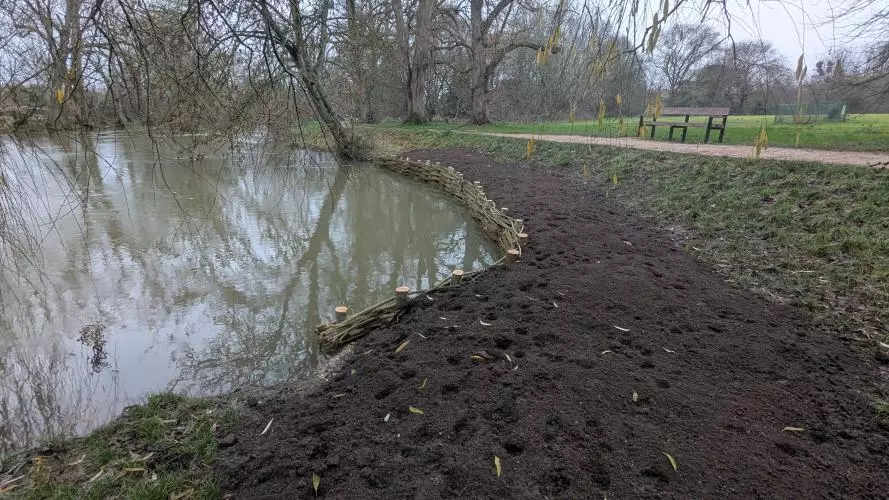
To protect the River Cherwell’s banks from erosion without resorting to harsh concrete or sheet piling, the University Parks team has embraced a traditional, natural solution. By interweaving living willow harvested from Parsons Pleasure, this green engineering project creates a habitat-friendly "living wall" that will root, grow, and strengthen the riverbank over time.
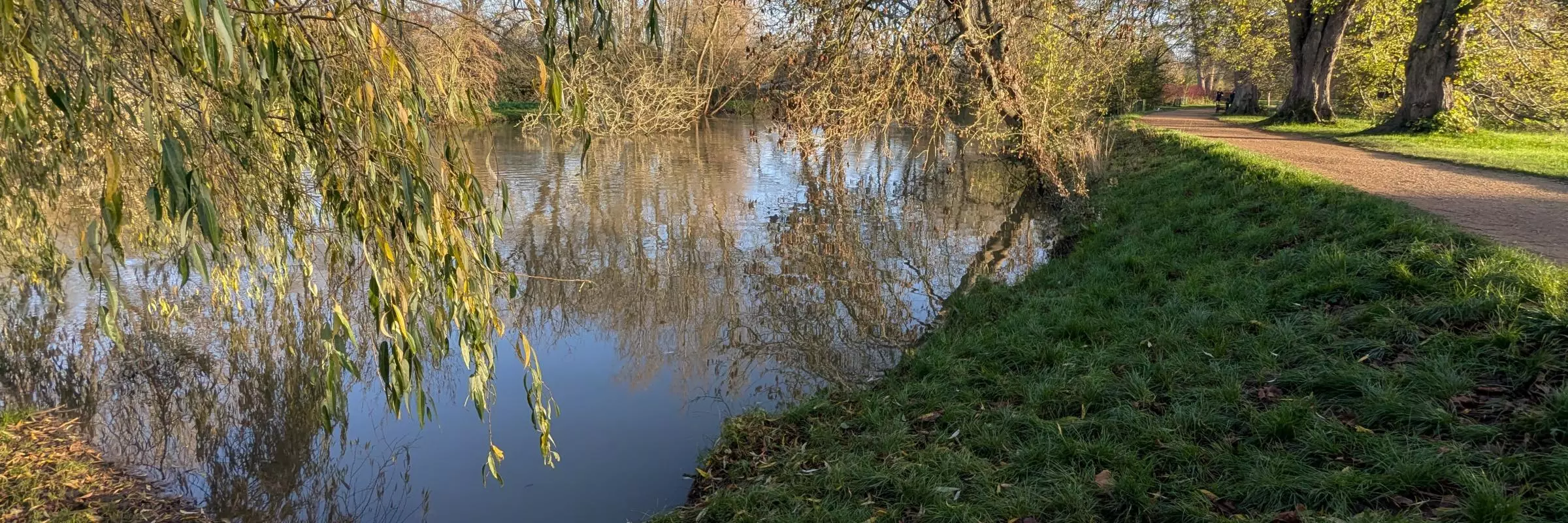
The River Cherwell flows through its floodplain along the eastern boundary of University Parks. Historically, this landscape has been shaped by shifting river channels, medieval agriculture, and centuries of recreational use. As the land is low lying and prone to flooding, stable banks are essential to prevent undercutting during flood events, protect footpaths from damage, and safeguard adjacent vegetation and trees.
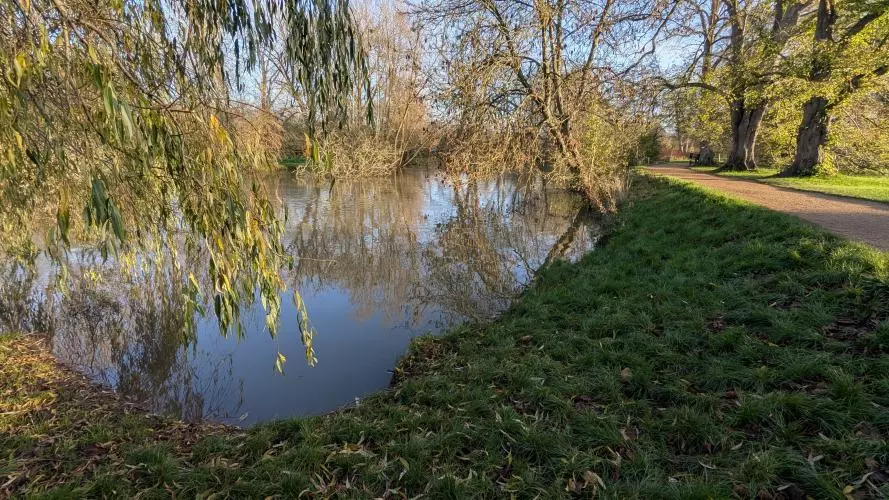
The riverside path in the Parks runs alongside the Cherwell. It is a place where wildlife thrives and where visitors can enjoy peace and tranquillity. In recent years sections of this riverbank have shown increasing signs of wear and erosion. In the past, the solution to this problem would have been to install hard structural bank supports such as gabions, sheet piling or concrete. While long lasting, these solutions are expensive, unattractive, carbon intensive and offer no benefit to biodiversity.
With these considerations in mind, the University Parks team explored alternative sustainable methods to stabilise the riverbank and improve biodiversity. The arboricultural team had identified several willows for coppicing at Parsons Pleasure, and following research into living willow structures and discussions with the Environment Agency, the team began investigating green engineering techniques using living willow to stabilise our eroding riverbank. Due to the specialist nature of the work, a contractor experienced in these techniques was consulted. The proposal was then presented to the University's Environmental Sustainability team, who were pleased to support and fund the project.
Instead of concrete or hard engineering, willow stakes sourced from Parsons Pleasure were driven into the riverbed and interwoven with osier binders to tie them together. The gap between the willow and the bank was then filled with a mixture of washed gravel and topsoil to aid the willow rooting. This traditional, sustainable, and habitat friendly method acts as a "living wall," providing erosion control while enabling the structure to root, grow and strengthen naturally over time.We're really looking forward to seeing the new Willow habitat grow this year, and we hope visitors enjoy it and feel inspired to explore green engineering techniques in their own projects.
This project was a fantastic example of effective partnership working between University Parks, the Environmental Sustainability Team and external contractors. It highlights the University's commitment to the long term care of the Parks' landscapes and ecosystems whilst incorporating traditional and sustainable techniques.