Royal celebrations and community life
For over a century, University Parks has served as Oxford’s central gathering place for major national occasions and community celebrations. On 22 June 1898, local elementary school children enjoyed a grand tea party across the grounds to mark Queen Victoria’s Diamond Jubilee. Local children gathered in the Parks once again to celebrate Coronation Day in 1911, followed by a Peace commemoration on 19 July 1919 – though heavy rain unfortunately forced the cancellation of the planned outdoor games. Throughout the 20th century, the grounds remained a focal point for civic gatherings, hosting celebrations for the Silver Jubilee of King George V alongside the coronations of both King George VI and Queen Elizabeth II.
Summer concerts
During the 1920s and 1930s, bands played in the Parks on summer evenings. In 1927, the Curators reported that the attendance at these averaged 8,000. The following year a total attendance of 70,000 was recorded at five concerts given by the City Military Band. As early as the beginning of the 20th century, the large numbers of the public using the Parks on summer evenings and weekends caused the Curators to request the services of a police constable from the City Council's Watch Committee.
World War I
During the First World War (1914–1918), the peaceful landscape was temporarily repurposed to support the national war effort. The open grounds quickly transformed into an active military site, host to troop drilling and tactical training exercises. Aeroplane hangars were erected across the fields, while soldiers were billeted in a makeshift camp established in the south-eastern corner of the estate.
To aid local food supplies, an allotment area for growing vegetables was created near Lady Margaret Hall. With the park maintenance team reduced to a skeleton crew and resources stretched thin, all organised University sports ceased for the duration of the conflict – with only tennis and croquet continuing on the lawns.
World War II
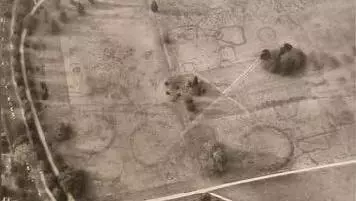
The Parks were called into service once again during the Second World War, transforming the open landscape into vital agricultural and defensive terrain. As part of the national 'Dig for Victory' campaign, around 80 vegetable allotments were established across the grounds. Aerial photographs from the era show these plots located to the south of the path to High Bridge, between Thorn Walk and Oak Walk, as well as to the north of the Science area. Harvest yields were often variable, however, owing to the poor soil quality across much of the site.
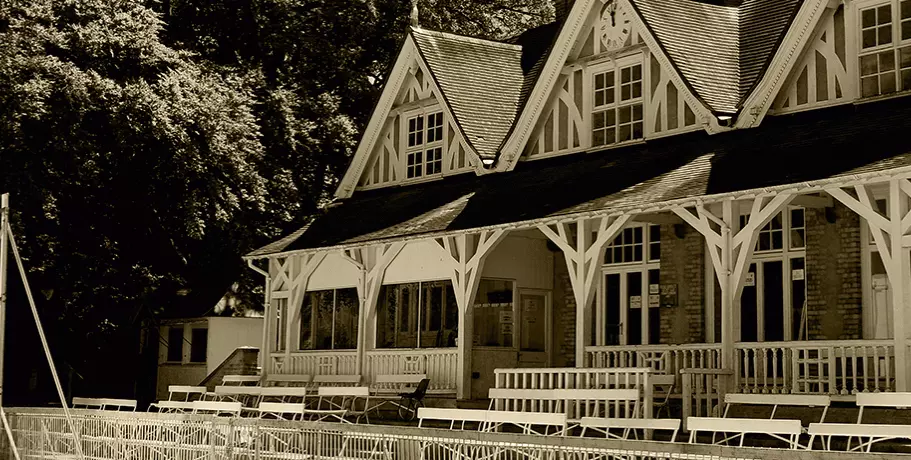
Defensive structures were also installed throughout the area. An air raid shelter was built beneath the Cricket Pavilion, while physical obstructions were placed across the open lawns to prevent enemy aircraft from landing. Following the conflict, work began to reinstate the landscape, though full recovery took decades. Most noticeably, the iron boundary railings along the south and west edges – which had been removed to supply metal for munitions – were not replaced until the late 1960s.
A history of Sports in the Parks
From the first football matches of 1867 to world-class summer cricket, team sport has been an integral part of University Parks for over 150 years.
One of the objectives of the Parks was to provide facilities for team sport for members of the University. Since 1965, this has been overseen by the Committee for Sports, now the Sports Strategy Committee, which is distinct from the Parks Curators.
In 1867 permission was given to the Eton, Harrow and Winchester Football Clubs to play in the Parks - the first organised sport to be held there. The following year this was extended to the newly formed Association Football Club and a year later to the Rugby Football Club.
There were many objections to the use of the Parks for sporting activities, most notably Charles Dodgson (Lewis Carroll). He was a Scholar and Fellow of Christ Church, who wrote a long poem The Deserted Parks lamenting the destruction of the tranquillity that he had found in the Parks.
The Parks have been the home venue of Oxford University Cricket Club since 1881 when cricket was first officially played here. Although a plan for the formation of cricket grounds had been prepared in 1867, it was not until 1879, following instructions to the firm of Field and Castle to prepare a fresh plan for the sports pitches, that a Decree was passed by Convocation to allow a portion of the Parks to be let to the University Cricket Club.
Today the cricket ground is regarded as one of the most attractive in the country. Both County and International matches are scheduled during the summer months. Tennis and croquet are also played in the Parks during summer, with hockey and lacrosse played in the winter months.