
Kellogg College gardens take root with a new focus on biodiversity
From pollinator-friendly wildflowers to planting designed to withstand drought, Kellogg College's gardens are being transformed to create more resilient and biodiverse spaces – offering a glimpse of how the University's sustainability ambitions are being put into practice across its estate.
The work is bringing together horticultural expertise, thoughtful design and a focus on biodiversity to create greener spaces for students, staff and visitors, while responding to the changing conditions facing gardens across the UK.
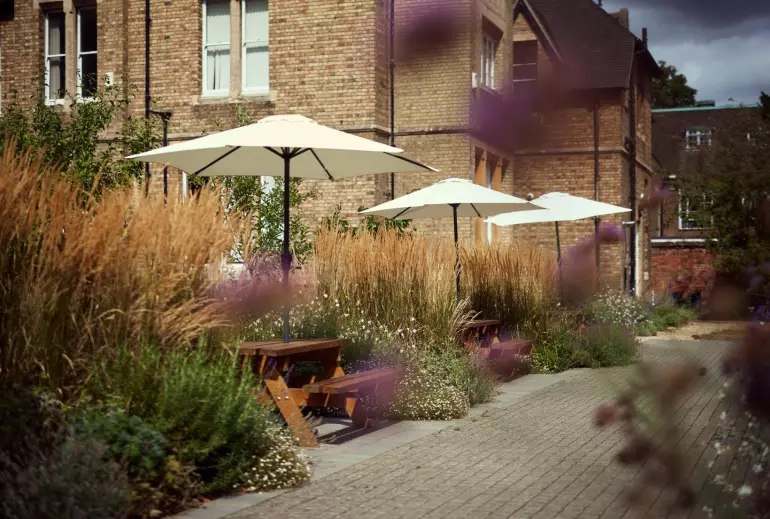
At the heart of the College, the Kellogg Hub was redesigned around three years ago by a leading garden designer, with planting originally carried out by an external contractor. Since then, some of the planting has struggled, particularly as increasingly long periods of drought have made certain species less suited to the conditions. The Parks team has been carefully managing the existing planting through pruning, watering and relocating plants where necessary, while replacing some species with plants better suited to the site.
The experience has also led Kellogg College to increasingly involve the Parks team in designing and delivering its planting schemes. Rather than taking a standard approach, the team assesses each site individually, considering factors such as aspect, soil and growing conditions when selecting plants.
This method is particularly important as gardens face the effects of a changing climate, including longer periods of drought.
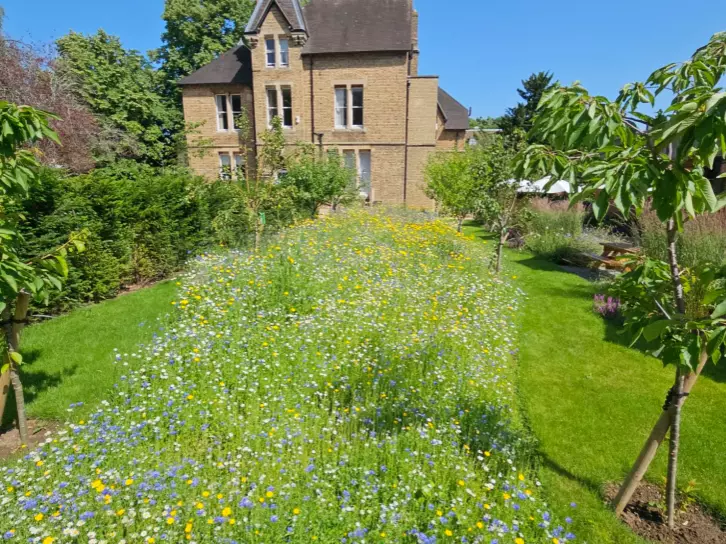
Elsewhere at the College, an area that was once largely conventional lawn has been transformed into a more naturalised garden designed to support pollinators and bring greater variety to the landscape.
Last year, the Parks team introduced a wildflower area, which proved highly successful – so much so that the flowers began spreading into the surrounding paving. The design has since been refined, with the edges re-turfed and a more defined strip of wildflowers created.
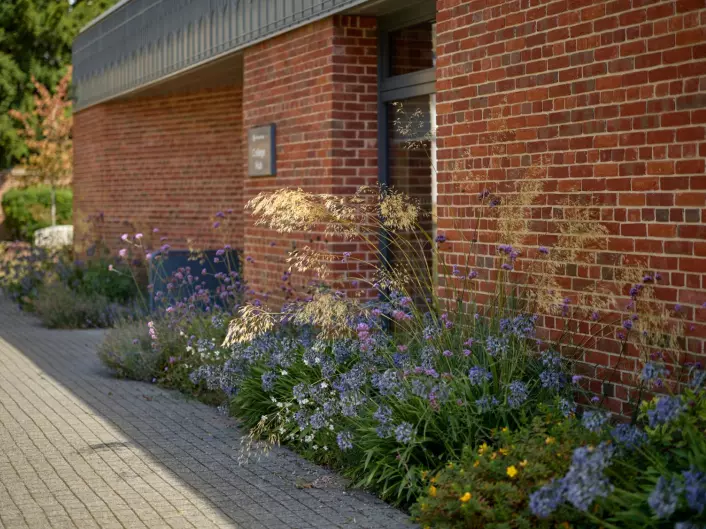
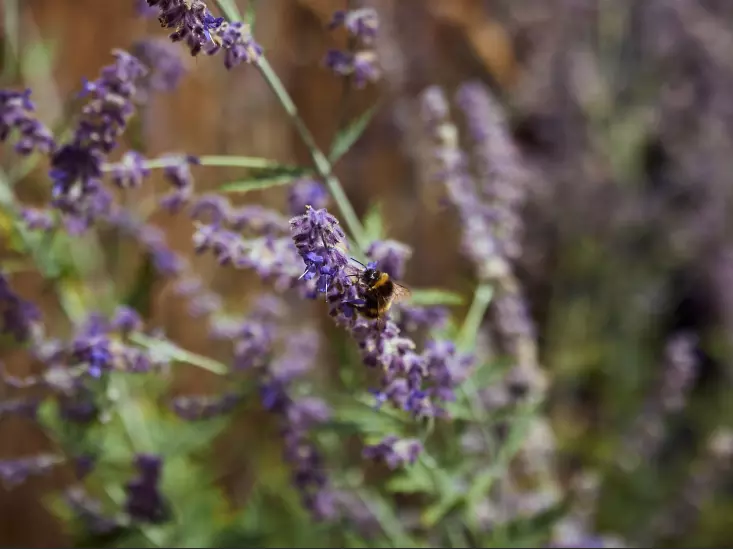
A selection of fruit trees has also been planted, alongside new borders featuring flowering plants, grasses and foliage. The scheme has been chosen to provide structure, colour and habitat for bees and other insects, while reflecting Kellogg’s preference for softer tones, including whites and purples.
Different plants flower at different times, helping to maintain interest throughout the growing season while providing a continuing source of food for pollinators.
The result is a less formal, more naturalised space that is already beginning to establish itself and is expected to become increasingly vibrant and diverse as the planting matures.
The work will continue in September, when the Parks team will further improve the area around the garden and entrance. Existing gravel and the surface along the front of the borders will be removed and replaced with Cotswold chippings, chosen to reflect the College’s preferences and complement the planting.
New metal edging will define the borders from the paths, while the driveways along the front of the site will also be improved. Two large new borders will be created outside properties 60 and 62 Banbury Road, close to the College’s main reception, bringing more flowers and colour to the approach to the College.
The Parks team has also secured a contract to redesign completely another garden at Kellogg. Work is due to begin in October and is expected to take around two months.
The project will include new garden lighting, trellises, stonework, brickwork and extensive new planting, with much of the existing garden removed to make way for the new design. The Parks team is working with the College to refine the original plans, using its knowledge of the site and Kellogg’s preferences to help shape the final scheme.
Together, the projects demonstrate a growing partnership between Kellogg College and the Parks team, with horticultural expertise helping to create gardens that are attractive, practical and better suited to the environmental conditions they face.
They also reflect wider University priorities around sustainability, biodiversity and the careful stewardship of Oxford’s historic and natural estate – showing how these ambitions can be brought to life through practical changes to the University’s green spaces.
As the new planting becomes established and further work gets underway, Kellogg’s gardens are set to become more colourful, resilient and welcoming spaces for students, staff, visitors and wildlife